Jade Majed BuGhanem
Jade Majed BuGhanem, usually just Jade BuGhanem, is a designer, engineer, and technologist in New York City, working at the intersection of physical craft and software. He has spent five-plus years shipping production web and interactive products, and currently builds AI-native tools. His work spans product design, industrial fabrication, sound design, user experience, and interactive hardware, sometimes in the same project.
Selected history
→ full work history on LinkedInOpen to conversations about new work — majed.bg@gmail.com.
How I build with AI
Summary of what my Claude Code usage analytics say about how I work (April–May 2026):
241 sessions · ~109K lines across 1,407 files · 88% of classified outcomes mostly-or-fully achieved.
- Design first, code second. Most features begin as a structured interview with Claude Code grounded in the existing codebase, locking decisions one-by-one until there is a persistent design brief and a phased plan. Implementation starts only after that.
- Phased plans, TDD per packet. Work decomposes into named packets (P0.A → P5.E) and executes under strict red-green-refactor cycles. Of 130 classified outcomes, only 7 hit “misunderstood request” — the planning happens before the prompt.
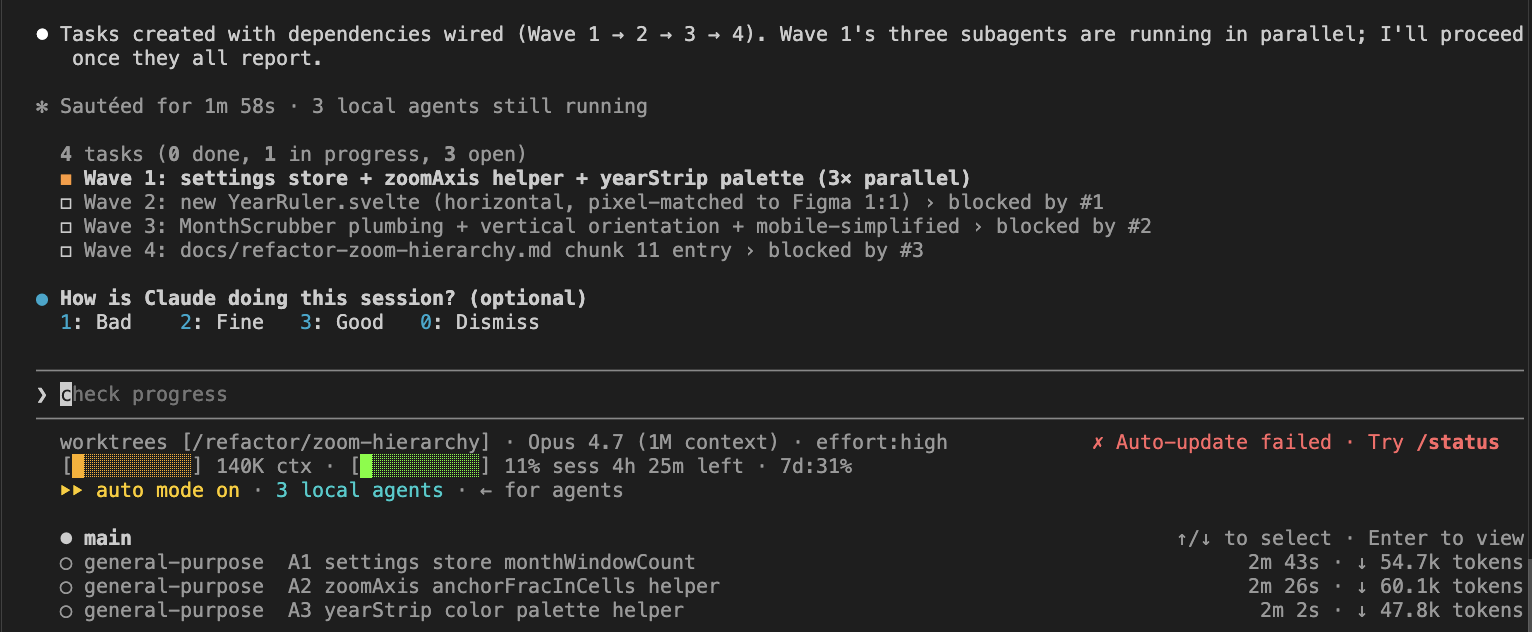
Orchestrator running Wave 1 — three subagents in parallel, later waves blocked by dependencies - Multi-Claude orchestration. An orchestrator session dispatches packets to worker sessions in worktrees, each verified at the diff before merge. ~25% of messages cross between them.
- Vertical-slice ownership. A single session routinely threads schema migrations → typed backend → React + Zustand frontend → Raspberry Pi runtime. Multi-file change is the #1 capability the agent contributes.
- Active supervision. Reads run roughly 1:1 with edits: agent output gets checked, not assumed. Every “wrong approach” or “buggy code” event (32 of each over the month) is caught at the diff, not in production.
Agent as execution surface. Architecture, module boundaries, and data contracts get worked out earlier on a separate surface (usually Claude Web with the project context loaded), so Claude Code starts from decisions already made.
Currently making
- Strata
A real-time DJ setlist capture system — a small Pi in the booth reads track data from the CDJs as music plays and writes every set into a permanent public archive. Infrastructure for creative attribution in a culture that has long kept the producer off the record.
- Ruya
A vision-centered LLM ideation workbench — values, needs, and a problem domain become a four-step pipeline (seeds → branching → mastermind → architect) where every artifact is editable, versioned, and re-runnable.
- Sonoform
music visualizing sculpture
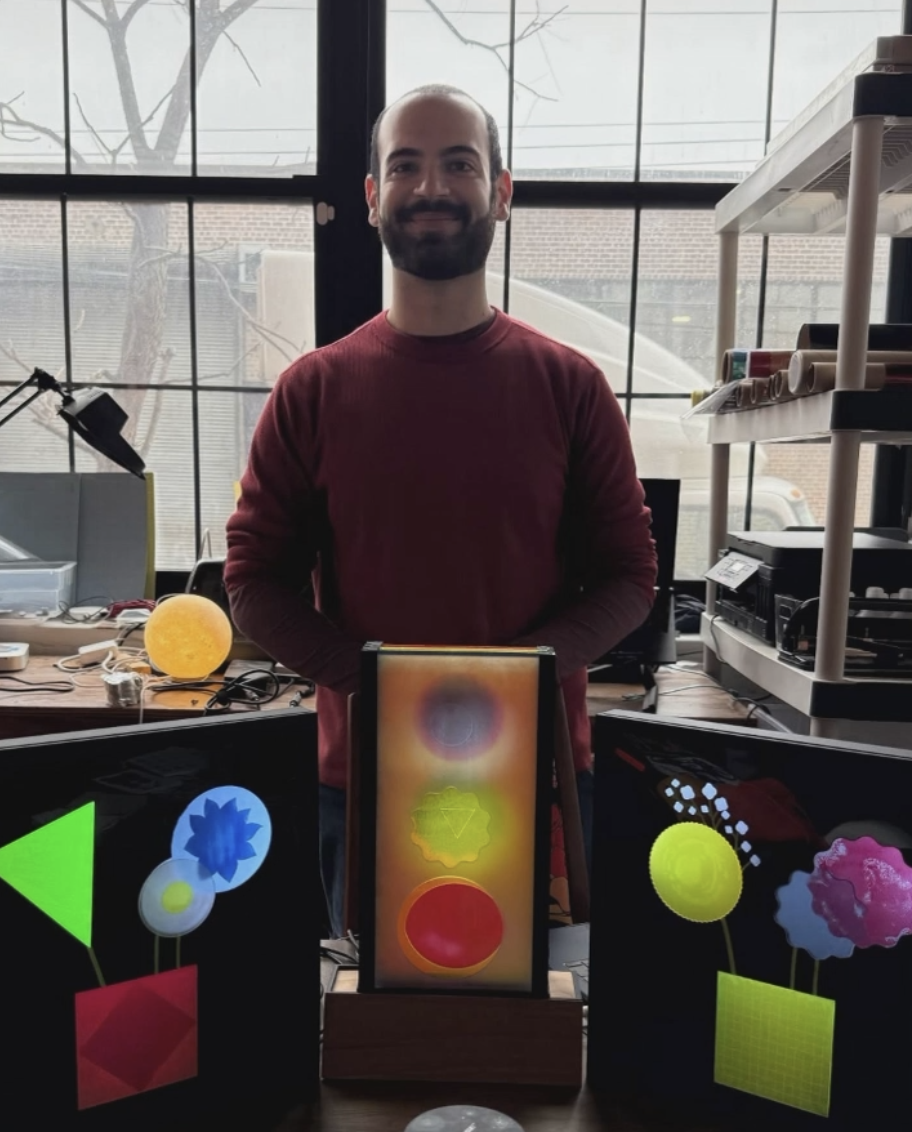
Sonoform prototypes (WIP) at Brooklyn Spark — Brooklyn, NY, Dec 2025
Recent materials & tools
- Claude codesee Matt Pocock’s claude engineering skills repo
- Raspberry Pi 4
- Aluminum extrusions + acrylic sheets
Currently reading
- Attensity!A Manifesto of the Attention Liberation Movement